September 5, 2026
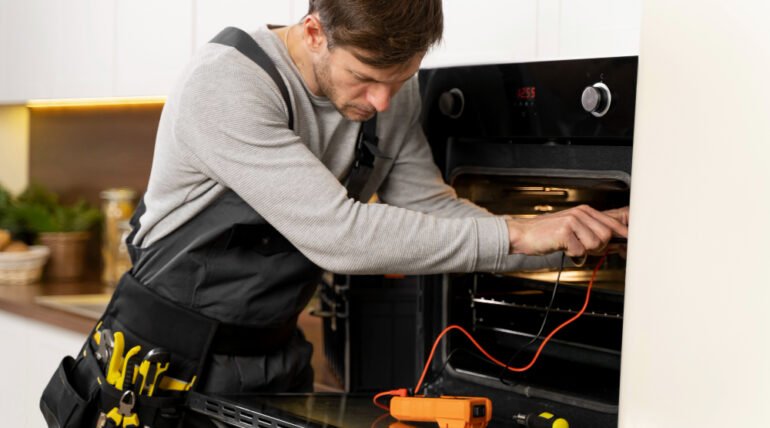
Your oven should heat accurately. Your burners should respond when you turn them on. When either stops working correctly, the problem can range from a simple setting to an internal electrical or gas-system fault.
Oven & range repair starts with one question: what exactly is the appliance doing?
Common Oven & Range Problems
Different symptoms point the diagnostic process in different directions.
- Oven not heating
- Oven heating unevenly
- Oven temperature is inaccurate
- Oven will not turn on
- Gas burner will not ignite
- Electric burner will not heat
- Burner temperature is difficult to control
- Oven door will not close properly
- Display shows an error code
- Range makes unusual clicking or buzzing sounds
A symptom is not a diagnosis.
An oven that does not heat could have a problem involving a heating element, igniter, temperature sensor, thermostat, controls, wiring, or power supply. The exact cause requires proper evaluation.
What You Can Safely Check
Start outside the appliance.
- Verify the selected cooking mode and temperature.
- Confirm that the appliance has power.
- Check whether a control lock or delayed-start feature is active.
- Make sure the oven door closes completely.
- Look for an error code on the display.
- Check the owner’s manual for model-specific instructions.
For an electric range, observe whether the problem affects one cooking element or several. That difference can provide a useful diagnostic clue.
For a gas range, notice whether a burner clicks, produces a flame, or fails to respond. Keep the burner area clean according to the manufacturer’s instructions.
Do not dismantle gas connections, bypass safety devices, or attempt internal electrical repairs as basic troubleshooting.
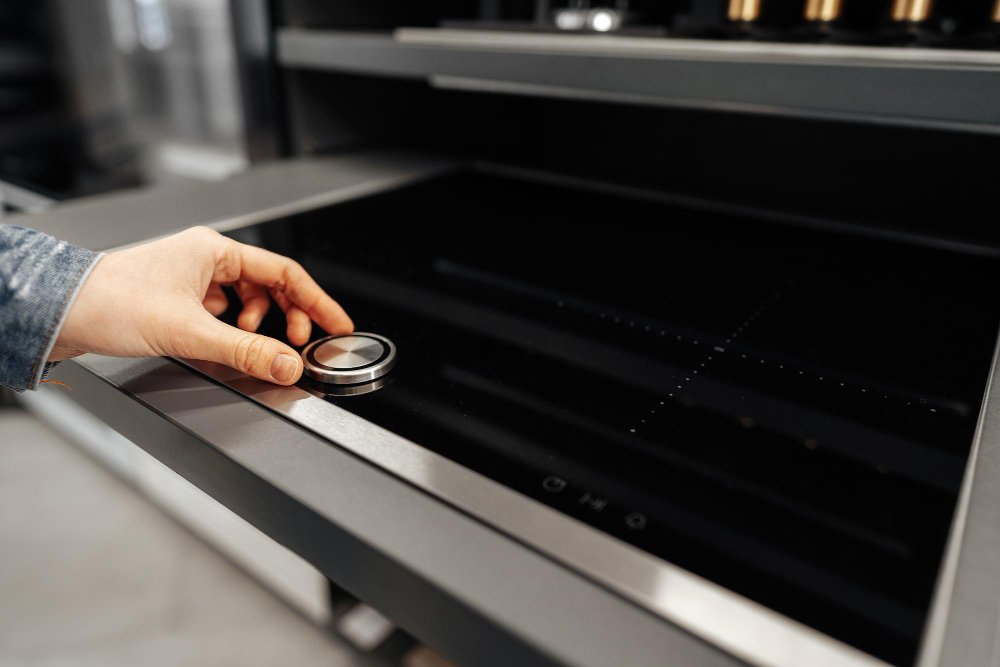
Why Your Oven May Not Heat Correctly
Heating problems can appear in several ways. The oven may remain completely cold, heat slowly, overshoot the selected temperature, or cook food unevenly.
Possible areas involved include:
- Heating element
- Gas igniter
- Temperature sensor
- Thermostat
- Burner or surface element
- Burner switch
- Electronic control
- Internal wiring
Do not replace a component based only on the symptom.
For example, an oven that will not heat does not automatically need a new heating element. An ignition, sensor, electrical, control, or power-related problem may produce a similar result.
Uneven cooking also deserves careful evaluation. Pan placement, rack position, cookware, cooking mode, and normal temperature cycling can affect results. Persistent or substantial temperature problems may require further diagnosis.
Gas and Electrical Warning Signs
Some oven and range problems should end troubleshooting immediately.
If you suspect a gas leak, stop using the appliance. Do not attempt to locate the leak with a flame, dismantle a gas connection, or continue operating the range to see whether the problem disappears.
Follow appropriate gas-safety procedures, leave the affected area when necessary, and contact the appropriate gas utility, emergency service, or qualified professional.
Stop using the appliance if you notice:
- Gas odor or another indication of a possible gas leak
- Smoke unrelated to normal cooking
- Sparking from an unexpected location
- Burning electrical odor
- Exposed or visibly damaged wiring
- Severe or abnormal overheating
Repeatedly resetting a breaker is not a repair. If the electrical protection trips again, the cause should be investigated.
When Professional Oven & Range Repair Makes Sense
Basic checks can rule out simple problems. Internal diagnosis is different.
Professional service may be appropriate when:
- The oven has power but will not heat.
- The temperature remains significantly inconsistent.
- A gas burner repeatedly fails to ignite correctly.
- An electric element remains cold or behaves abnormally.
- The appliance repeatedly displays an error code.
- The oven shuts down unexpectedly.
- The problem involves internal wiring or controls.
- Basic troubleshooting does not resolve the issue.
Before requesting service, record the model number if safely accessible, the exact symptom, any displayed error code, and whether the problem affects the oven, one burner, or multiple cooking functions.
If safe basic checks do not identify the cause, Empire Appliances Repair can provide professional oven and range diagnosis and repair. Testing the appliance helps identify the actual fault before parts are replaced unnecessarily.
Start with the simple checks. Stop when troubleshooting reaches gas, internal electrical components, or safety systems. Diagnose before replacing parts.