August 8, 2026
You open the freezer in the morning expecting the usual rush of cold air. Instead, something feels different. The ice cream is softer than it should be, a package of frozen vegetables bends instead of staying solid, and the familiar hum of the appliance suddenly seems more noticeable.
At first, it is easy to hope the problem will correct itself. Maybe the door was left open for a few minutes. Maybe someone changed the temperature setting. But several hours later, the food is still getting softer.
Now the question becomes more important: does the freezer need repair, or is there something simple you can safely check first?
Following the problem from its first warning signs to professional diagnosis can help you make that decision without replacing parts unnecessarily or attempting repairs that should be left to a qualified technician.
The First Sign: Something in the Freezer Has Changed
A freezer problem does not always begin with a completely warm compartment. Often, the first clue is subtle. Food may take longer to freeze, ice cream may become unusually soft, or frozen items near one part of the compartment may begin thawing while others remain solid.
In another situation, the temperature may seem normal but a thick layer of frost begins appearing where it was not present before. You might hear a new buzzing, clicking, rattling, or fan noise. The freezer may also seem to run for unusually long periods.
These observations matter because “freezer not freezing” describes a symptom, not a confirmed diagnosis.
A freezer depends on several systems working together. Proper airflow has to move through the compartment. The door needs to seal effectively. Temperature sensors and controls need to respond correctly. Fans, the defrost system, compressor-related components, and the refrigeration system all play different roles.
That means two freezers showing similar symptoms may have completely different underlying problems.
“The first step in freezer repair is not guessing which part has failed. It is understanding exactly how the freezer’s behavior has changed.”
Before doing anything else, pay attention to the pattern. Is the entire freezer getting warmer, or only one area? Is there unusual frost? Does the compressor seem to run frequently? Has the problem appeared suddenly, or has freezer performance gradually declined?
Those clues will become useful as you move to the next stage.
The Investigation Begins With the Simplest Safe Checks
Before assuming there is a mechanical failure, you look at the things you can safely inspect without opening panels or touching internal electrical or refrigeration components.
Start with the temperature controls. Make sure the setting has not been accidentally changed and consult the owner’s manual for the manufacturer’s recommended operation and settings.
Then look at the door.
A package sticking out from a shelf can be enough to prevent complete closure. A dirty, damaged, or distorted door gasket may also allow warm, humid room air to enter. The freezer then has to work harder while temperatures become more difficult to maintain.
Next, consider airflow. A freezer packed tightly from wall to wall may restrict the circulation of cold air. Food or containers placed against interior vents can sometimes create uneven temperatures even though the appliance is still operating.
There are only a few things you need to check at this stage:
- Confirm that the freezer has power.
- Verify that the controls have not been accidentally changed.
- Make sure the door closes completely.
- Inspect the accessible door gasket for obvious dirt or damage.
- Check whether food is blocking visible interior airflow areas.
- Listen for sounds that are different from normal operation.
Nothing here requires disassembly.
That distinction is important: useful troubleshooting does not have to mean taking the appliance apart.
If one of these simple checks reveals the problem, you may have found the explanation. But suppose everything looks normal and the freezer continues getting warmer. The story has reached a different stage.
The Problem Continues: What Could Be Happening Inside?
Several hours pass. The door is definitely closed. The setting looks correct. Nothing obvious is blocking airflow, yet the freezer still cannot maintain normal freezing conditions.
At this point, possible causes become more technical.
For example, an airflow or fan problem may prevent cold air from circulating properly. A temperature sensor or thermostat issue may interfere with the appliance’s ability to respond correctly to temperature changes.
Excessive frost can provide another clue. Freezers commonly use a defrost system to control frost accumulation around cooling components. If that system does not operate correctly, frost may eventually interfere with airflow and cooling performance.
Then there are compressor-related possibilities. A freezer that is not freezing can sometimes have a problem involving the compressor, its starting components, or the sealed refrigeration system. But a warm freezer does not prove that the compressor itself has failed.
This is where guessing becomes risky and potentially expensive.
“Several different failures can create the same symptom. Testing is what separates a possible cause from a confirmed repair.”
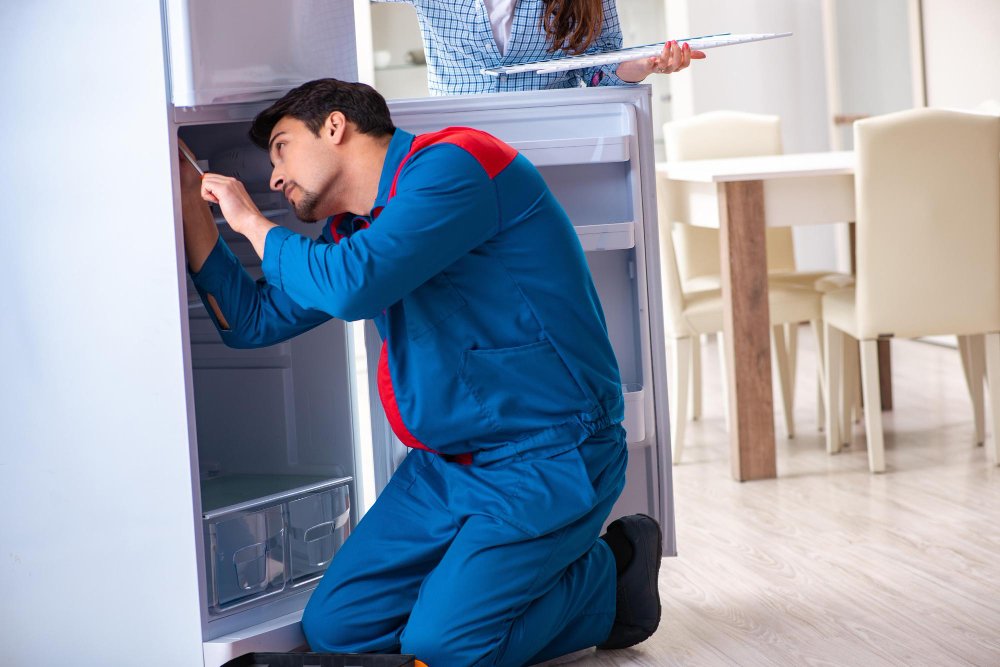
A technician may need to determine whether fans are operating correctly, whether sensors are providing appropriate information, whether the defrost system is functioning, and whether the refrigeration system is operating as intended.
Those checks can involve internal electrical components, moving parts, refrigerant systems, and specialized diagnostic procedures. They are very different from checking a door gasket or verifying a temperature setting.
Once troubleshooting reaches internal electrical or sealed refrigeration components, the safest next step is usually diagnosis rather than experimentation.
As the Temperature Rises, Food Safety Becomes Part of the Decision
By now, the freezer problem is no longer only about the appliance. It is also about what is stored inside it.
If frozen food begins thawing, avoid deciding whether it is safe solely by looking at it, smelling it, or assuming that food is safe because it still feels somewhat cold. How long the food has been exposed to higher temperatures and its actual temperature can matter.
Keep the freezer door closed as much as reasonably possible while you assess the situation. Repeatedly opening it allows additional warm air inside and can accelerate temperature changes.
For decisions about keeping, refreezing, or discarding food, follow current official food-safety guidance rather than relying on appearance alone.
The appliance itself can also provide warning signs that should not be ignored. Smoke, sparking, a burning odor, exposed wiring, or severe overheating are reasons to stop using the freezer and follow appropriate electrical safety procedures.
Do not repeatedly reset an appliance displaying signs of an electrical problem in the hope that it will eventually return to normal.
Water around an appliance also deserves attention, particularly when it could come into contact with electrical components or connections.
The priority has now changed. Protecting food and maintaining safe conditions comes before determining whether the freezer can continue operating until a convenient repair time.
The Final Stage: Deciding Whether Freezer Repair Makes Sense
Imagine that the simple checks did not solve the problem. The freezer still has power, but it cannot maintain temperature. Perhaps frost continues returning, the temperature fluctuates, or an unusual sound persists.
This is the point where professional freezer repair can provide something that guesswork cannot: a diagnosis.
Before arranging service, gather a few details. Find the model number if it is safely accessible. Note when the problem began, whether the freezer is completely warm or only warmer than normal, whether frost or water is present, and whether you have noticed unusual noises or an error code.
These observations can help a technician understand the symptom pattern before deeper testing begins.
And what if the freezer is older? Age alone does not automatically mean replacement is the better choice.
Consider the freezer’s overall condition, previous repair history, type of failure, complexity of the required repair, availability of parts, and what would be involved in replacing the appliance. A relatively straightforward repair may make sense for one freezer, while a complex problem combined with other recurring failures may lead to a different decision.
If the basic homeowner checks have been exhausted and the cause remains unclear, Empire Appliances Repair can diagnose freezer problems and determine what may be required to restore proper operation. The goal of diagnosis is to identify the actual fault before deciding which repair—or whether replacement—is appropriate.
The story that began with slightly soft ice cream does not always end with a failed freezer. Sometimes the cause is simple. Sometimes it requires a technician to trace a problem through airflow, temperature control, the defrost system, fans, or refrigeration components.
The important part is knowing where homeowner troubleshooting should end.
Start with what you can safely observe. Protect your food if temperatures begin rising. Pay attention to the clues the freezer gives you. And when those clues point beyond basic checks, professional diagnosis can turn an uncertain symptom into a clear next step.