


September 30, 2026
You reach for a bag of frozen vegetables and notice something isn’t quite right. The package feels softer than usual. The ice cream has lost its firm texture. Maybe there is a thick layer of frost along the back wall—or the freezer suddenly seems much quieter than you remember.
So, is the freezer actually failing?
Maybe. But before you assume the compressor is bad or start changing temperature settings, take a closer look at what has actually changed. Freezer problems often reveal themselves through small clues long before the appliance stops freezing completely.
The useful question isn’t simply, “Is it cold?” It is: Is the freezer maintaining its normal temperature consistently, and are there other symptoms happening at the same time?
“A freezer problem becomes easier to understand when you stop guessing which part failed and start looking for the pattern behind the temperature change.”
Your Freezer Isn’t Freezing Properly—But What Does That Actually Mean?
“My freezer isn’t cold enough” sounds like one problem. In reality, it can describe several very different situations.
Perhaps everything is slowly becoming softer. Maybe food near the door feels different while items deeper inside remain frozen. Or the freezer gets cold, warms up, and then seems to recover again.
Those differences matter.
Start by looking at the freezer as a whole. Has the temperature control been changed accidentally? Is the door closing completely? Is something preventing the gasket from making proper contact? Are packages packed so tightly that they interfere with the appliance’s intended airflow?
Also consider what happened recently. Did you add a large amount of unfrozen food? Was the door left open? Was there a power interruption? Has the freezer been moved or cleaned?
Useful observations include:
- whether food is soft throughout the freezer or only in certain areas;
- whether the problem appeared suddenly or gradually;
- whether the freezer runs frequently or seems unusually quiet;
- whether frost or ice has appeared where it normally does not;
- whether the door closes and seals normally;
- whether you can hear normal fan or compressor-related operation.
If the simple external conditions look normal but the freezer still cannot maintain temperature, professional diagnosis may need to look deeper into airflow, temperature sensing, fans, controls, the defrost system, compressor operation, or the sealed refrigeration system.
And this is important: poor freezing does not automatically mean a failed compressor. Several different conditions can produce similar temperature symptoms.
Quick Tip: Before changing the temperature setting, note its current position. Changing several settings at once can make it harder to understand what was actually causing the problem.
That Wall of Frost Is More Than a Cosmetic Problem
A little frost and a freezer covered in dense ice are two very different things.
If you notice substantial frost buildup, especially when it repeatedly returns, pay attention to where it forms. Is it concentrated near the door? Is there a heavy layer on an interior panel? Are packages becoming surrounded by ice?
Why does location matter? Because frost is often connected to moisture entering or remaining where it should not, but the reason can vary.
A door that does not close completely can allow warm, humid air into the compartment. A damaged or poorly sealing gasket may contribute to a similar condition. Repeated door opening can also introduce moisture.
In other situations, persistent frost may be connected to the appliance’s defrost or airflow systems and require further diagnosis.
Before assuming there is an internal failure, check the basics:
- Look for packages preventing the door from closing.
- Inspect the accessible gasket for obvious debris, damage, or poor contact.
- Check whether drawers and shelves are correctly positioned.
- Notice exactly where frost is concentrated.
What shouldn’t you do? Do not attack ice with a knife, screwdriver, or other sharp object. Freezer surfaces can conceal refrigerant tubing and other components. A small puncture can turn a manageable frost problem into a much larger repair.
If defrosting is appropriate for your model and situation, follow the manufacturer’s instructions rather than improvising with sharp tools or unsafe heating methods.
And if the frost disappears only to return quickly under normal use, that recurrence is valuable information. At that point, the question is no longer simply how to remove the ice. It is why the freezer keeps creating the conditions that allow it to return.
Is the Freezer Too Loud—or Suddenly Too Quiet?
Freezers are not silent appliances. Depending on the design, you may hear fans, refrigerant movement, compressor operation, clicks, or other sounds during normal cycles.
So how do you know when a sound matters?
Compare it with what is normal for your freezer. A sound that has always been present is very different from a grinding, rattling, buzzing, or repeated clicking noise that appeared yesterday.
Even silence can be useful information.
If the freezer is becoming warm and you no longer hear familiar operating sounds, note that. If it seems to run almost constantly but temperature continues to rise, note that too.
You do not need to identify which component is making the sound. Instead, pay attention to the pattern:
- Does the noise happen continuously?
- Does it begin when the freezer starts a cooling cycle?
- Does it change when the door opens?
- Is it accompanied by poor cooling?
- Is there visible frost at the same time?
Those details can help separate a harmless operating sound from a symptom that deserves investigation.
Fans, compressor-related systems, ice buildup, vibration, and other components can all influence freezer noise. Testing is what determines the actual cause.
A new sound plus a temperature problem is usually more informative than a new sound by itself.
The same logic applies when the freezer appears to run constantly. Long operation does not automatically prove that the compressor has failed. Door sealing, temperature conditions, airflow, frost accumulation, recent loading, controls, or refrigeration-system performance may all influence how often the appliance operates.
What If the Freezer Isn’t Running at All?
A completely quiet freezer can feel like the clearest diagnosis of all: no sound, no cooling, therefore something major must have failed. But even here, start with the basics.
Is the appliance receiving power? Are the controls set correctly? Has a household circuit issue occurred? Is the interior light or display operating, if your model has one?
Remember that a light or display does not necessarily prove that every freezer system is functioning correctly. It simply gives you another piece of information.
If power appears normal but the freezer does not begin operating as expected, internal diagnosis may be required. Depending on the model, a technician may need to evaluate controls, temperature-related components, fans, electrical systems, compressor operation, or other parts of the cooling system.
There are also situations where troubleshooting should stop immediately.
Discontinue normal use if you notice:
- smoke;
- unexpected electrical sparking;
- a persistent burning electrical odor;
- visibly damaged wiring;
- water reaching electrical components.
And refrigerant or sealed-system work is not a homeowner DIY task. Do not puncture tubing, open the sealed refrigeration circuit, or attempt improvised refrigerant repairs.
There is another priority when a freezer becomes warm: the food inside it.
If frozen food is beginning to thaw, treat food safety as a separate issue from appliance diagnosis. Avoid repeatedly opening the door unnecessarily, and follow current food-safety guidance when deciding whether partially or fully thawed food can be kept.
Saving the freezer matters. Protecting what is inside it matters too.
When Does Freezer Repair Become the Right Next Step?
You have checked the settings. The door closes normally. Nothing obvious is blocking it. You have looked for unusual frost, listened to the appliance, and paid attention to how the temperature is changing.
But the freezer is still not behaving normally. What now?
This is where repeated resets and random adjustments usually stop being useful.
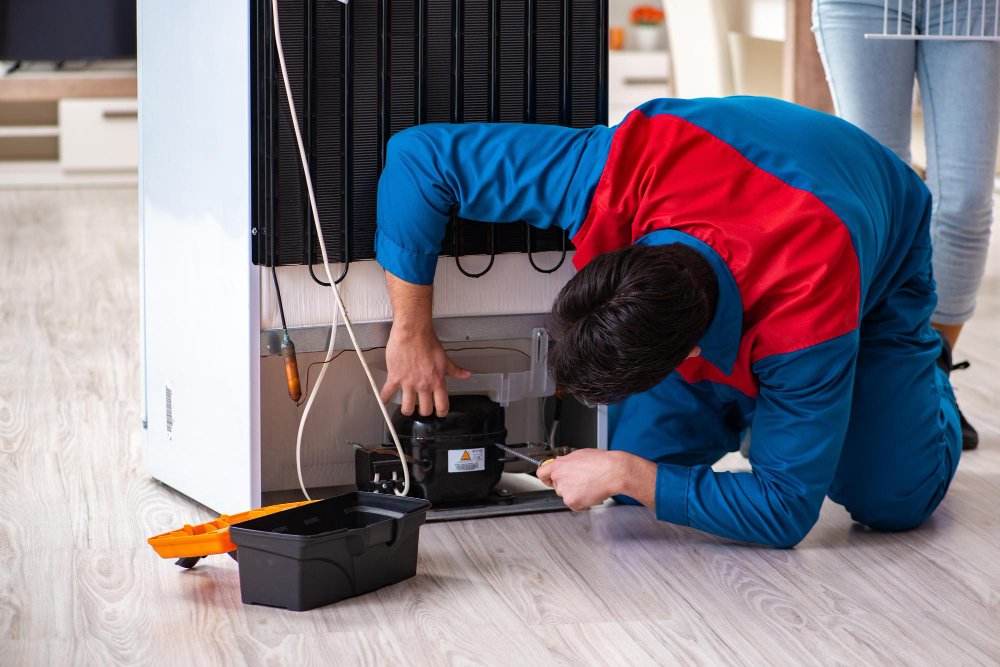
Professional freezer repair becomes appropriate when the problem persists after safe basic checks, when internal testing is required, or when the appliance shows symptoms that could indicate an electrical, mechanical, defrost, airflow, or refrigeration-system problem.
It is especially worth arranging diagnosis when:
- the freezer cannot maintain a stable freezing temperature;
- frost buildup repeatedly returns;
- the freezer runs excessively without cooling properly;
- a fan or other normal operating function appears abnormal;
- unusual noises occur together with temperature problems;
- the appliance repeatedly stops operating;
- safe external checks do not explain the symptom.
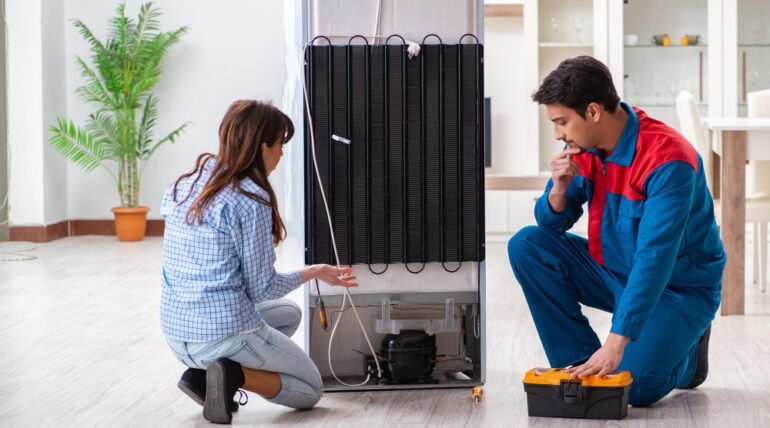
Empire Appliances Repair can diagnose freezer problems involving temperature performance, frost buildup, defrost systems, fans, controls, compressor-related operation, and sealed-system cooling issues.
Only after the fault is identified does it make sense to decide between repair and replacement.
Consider the confirmed problem, overall freezer condition, previous repair history, parts availability, and scope of the required work. A freezer that is not freezing does not automatically need replacement, just as an appliance that still produces some cold does not automatically need only a minor repair.
The symptom is the beginning of the diagnosis—not the conclusion.
So the next time the ice cream feels suspiciously soft, don’t start by guessing which part has failed. Look at the whole picture: temperature, frost, airflow, sound, door condition, and the way the problem developed.
Sometimes your freezer gives you more information than you think. You just have to know what to notice.