September 9, 2026
A garbage disposal is one of those kitchen appliances that earns its usefulness by remaining almost unnoticed. Food scraps disappear, water carries the residue away, and the entire process takes only seconds. There is little reason to think about the motor, grinding components, electrical connection, or drain system hidden beneath the sink—until the familiar sound changes.
Sometimes there is silence. Sometimes there is a low hum without movement. In other cases, the disposal operates but the sink drains slowly, water appears beneath the cabinet, or an unfamiliar grinding sound suggests that something has entered the chamber that does not belong there.
These symptoms are often grouped together as a single problem: the garbage disposal is broken. Yet they describe very different failures. Effective garbage disposal repair begins by separating them, because a disposal that has lost power requires a different line of investigation from one that hums, leaks, or drains poorly.
There is also an unusually important boundary with this appliance. The disposal sits directly beneath an opening where people naturally reach when something becomes stuck. That instinct should be resisted. Never place your hand or fingers inside a garbage disposal. Turning the wall switch off is not, by itself, a reason to treat the grinding chamber as safe.
The Sound of the Problem
The first useful diagnostic tool is observation. What happens when the disposal is activated? The answer can narrow the possibilities before anything is touched.
A completely silent disposal may have lost electrical power, activated its overload protection, developed a switch or connection problem, or experienced an internal electrical failure. Before assuming the motor has failed, check whether the appliance has power and whether the electrical circuit is operating normally. Some disposal models include a reset or overload-protection feature; if yours does, follow the manufacturer’s instructions rather than repeatedly pressing controls or cycling a breaker without understanding why protection was activated.
A disposal that hums tells a different story. Electricity may be reaching the motor, but the mechanism may not be turning normally. A jam is one possible explanation, but it is not the only one. Continuing to energize a disposal that only hums can place additional stress on the motor and should not become a troubleshooting method.
Then there is the disposal that runs but sounds wrong. A metallic clatter or harsh grinding noise may indicate that a foreign object has entered the chamber. Glass, metal, utensils, or other objects should never be retrieved by reaching inside with a hand. Disconnect the appliance from power according to appropriate safety procedures before any inspection, and use the manufacturer’s instructions for safe removal of accessible objects.
Slow drainage introduces another distinction. A disposal can rotate normally while water still lingers in the sink. In that situation, the problem may involve the drain path rather than the disposal motor itself. Food residue, grease, or another obstruction elsewhere in the plumbing can create symptoms that appear to be an appliance failure.
A leak tells its own story through location. Water appearing around the sink flange is different from moisture at a drain connection or water emerging from the disposal housing. Wiping the cabinet dry and immediately running another cycle may show that the leak still exists, but it does not explain its source. The more useful question is where does the water first appear?
This distinction matters because the visible symptom should guide the repair rather than dictate a replacement part. Silence does not automatically mean a failed motor. Humming does not prove a particular internal component is defective. Standing water does not prove the disposal itself is clogged. A wet cabinet does not tell you which seal or connection has failed.
The appliance is giving clues. Diagnosis begins when those clues are treated as evidence rather than conclusions.
The Boundary Between a Simple Check and a Repair
Garbage disposals create an unusual temptation for DIY repair because the appliance is physically accessible. It hangs beneath the sink, its plumbing connections are visible, and the source of a jam can sometimes seem tantalizingly close. Accessibility, however, is not the same thing as safety.
The most important rule is simple enough to remember without a manual: never put your hand into the disposal chamber. Do not rely solely on the wall switch as protection. Before attempting any manufacturer-approved procedure involving the appliance, electrical power must be handled according to appropriate safety instructions.
If the disposal is silent, safe external troubleshooting can begin with the household electrical supply and model-specific reset procedure. If a breaker has tripped, resetting it once may restore operation, but repeated tripping should not be dismissed. Electrical protection devices activate for a reason, and a recurring condition deserves investigation.
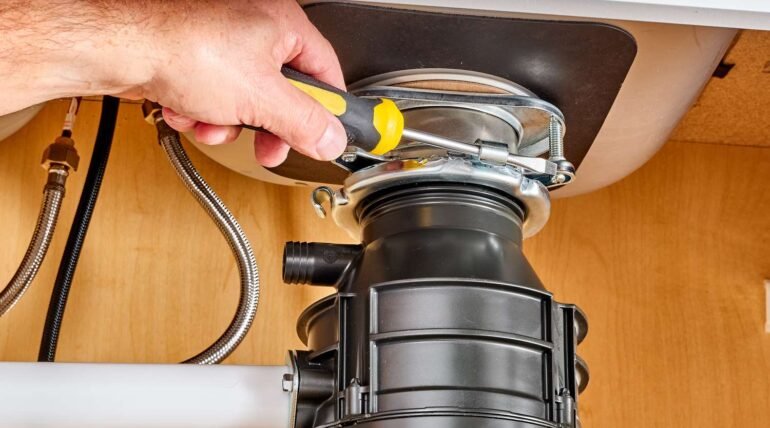
If the disposal hums without turning, stop operating it. Some models provide a manufacturer-approved method for manually freeing a jam from outside the grinding chamber, often using a specific tool or access point beneath the unit. That procedure should only be used when it is appropriate for the particular model and after the appliance has been safely disconnected from power.
What should not happen is improvised probing through the sink opening with fingers, uncontrolled tools, or an attempt to force the mechanism while it remains energized.
The same restraint is useful when dealing with drainage. Garbage disposals are designed to process appropriate food waste, not to serve as universal waste processors. Grease, fibrous material, excessive quantities of food, hard foreign objects, and other unsuitable material can contribute to drainage or mechanical problems. When the sink drains slowly, the entire waste path deserves consideration rather than automatically blaming the motor.
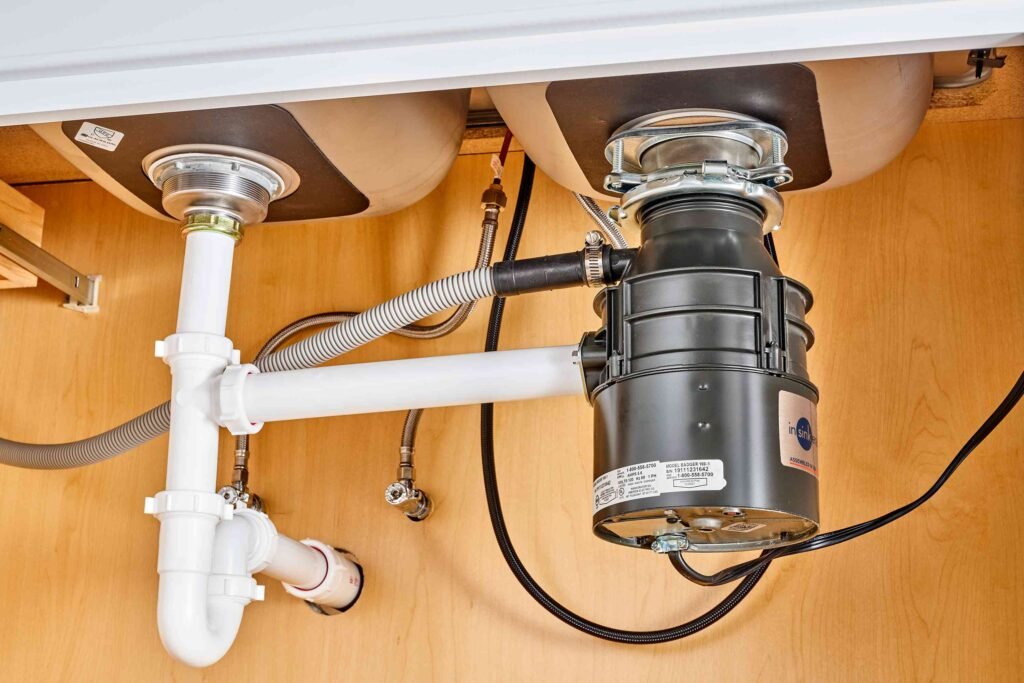
Leaks require patience as well. Dry the accessible area, observe the plumbing connections, and determine whether water appears during normal sink use, only while the disposal operates, or during drainage. That sequence can help distinguish an appliance-related leak from a plumbing connection or sink-related problem.
There are also clear reasons to stop. A burning electrical odor, smoke, unexpected sparking, visibly damaged wiring, recurring breaker trips, or water reaching electrical components moves the problem beyond routine homeowner troubleshooting.
A small number of observations are especially useful before professional service:
- whether the disposal is silent, humming, or turning normally;
- whether the sink drains normally;
- whether the problem began after a particular object or material entered the disposal;
- where a leak first becomes visible;
- whether electrical protection has repeatedly activated.
These details create a far better starting point than the phrase “the disposal stopped working.” They allow the problem to be approached as a sequence of events rather than a guessing game.
Repair Is Ultimately a Question of Cause
There is a tendency with small kitchen appliances to make the repair-or-replace decision too early. A disposal stops working and replacement immediately seems easier. In some cases, replacement may indeed be the practical outcome. But a decision made before diagnosis can overlook a simple external problem—or mistake a plumbing issue for an appliance failure.
A professional garbage disposal repair diagnosis may involve evaluating the electrical supply to the appliance, overload protection, motor operation, mechanical condition, mounting area, drain connections, or evidence of leakage. The exact path depends on the symptom.
A jammed mechanism and a failed motor can both leave the disposal unable to rotate, yet they are not the same repair. A loose drain connection and a damaged disposal housing can both leave water beneath the sink, yet they do not have the same solution. An electrical supply problem can make a perfectly functional disposal appear completely dead.
This is why replacement should follow understanding, not precede it.
The broader condition of the unit matters too. If the diagnosed problem is isolated and the disposal is otherwise in sound condition, repair may be reasonable. If the unit has significant corrosion, recurring leaks, repeated mechanical problems, extensive damage, or a failure for which repair is impractical, replacement may make more sense. Installation conditions, sink configuration, plumbing connections, and electrical requirements can also influence that decision.
If safe external checks do not reveal the cause, Empire Appliances Repair can evaluate the garbage disposal and determine whether the problem originates with the appliance itself, its electrical operation, or another part of the installation that affects performance.
And perhaps that is the most useful way to think about the machine beneath the sink. It is simple in daily use but not simplistic in construction. When it works, it asks for almost no attention. When it fails, the safest response is not to reach deeper into the mechanism, but to understand the symptom more clearly.
Listen to what changed. Observe where the problem begins. Keep hands out of the grinding chamber. And let the cause—not the inconvenience of the moment—determine what should happen next.
Lorem ipsum dolor sit amet, consectetur adipiscing elit. Ut elit tellus, luctus nec ullamcorper mattis, pulvinar dapibus leo.