September 16, 2026
An ice maker can fail in surprisingly different ways. It may stop producing ice completely, make only a few cubes, create unusually small or misshapen ice, leak water, freeze into a solid mass, or continue making ice without stopping.
Because several conditions can create similar symptoms, effective ice maker repair starts with questions rather than assumptions. The answers below explain what you can safely check, what different symptoms may indicate, and when the problem is likely to require professional diagnosis.
Quick Summary: Start with the water supply, settings, freezer temperature, ice bin, and visible obstructions. If those checks do not explain the problem, the water inlet system, sensors, controls, ice-making mechanism, or related components may need testing.
Why Is My Ice Maker Not Making Ice?
Start with the simplest possibilities. Confirm that the ice maker is turned on and that the refrigerator or freezer is operating normally. Depending on the model, an ice maker may use a switch, control-panel setting, sensor, or mechanical shutoff arm.
Next, consider the water supply. A closed supply valve, kinked water line, restricted filter, or another water-flow problem can prevent the ice maker from receiving enough water.
The freezer also needs to maintain appropriate conditions for ice production. If the compartment is noticeably warmer than normal, the ice maker problem may actually be part of a larger refrigeration issue.
If these basic conditions appear normal but ice production does not resume, further diagnosis may be needed. Possible areas include the water inlet system, ice maker assembly, sensors, controls, wiring, or other model-specific components.
Quick Summary:
- Confirm the ice maker is enabled.
- Check whether the freezer is cooling normally.
- Verify the accessible water supply.
- Look for a kinked or restricted external water line.
- Review filter replacement requirements for your model.
Why Is My Ice Maker Making Ice So Slowly?
Slow production does not necessarily mean the ice maker itself has failed.
Frequent door opening, recent installation, a large amount of newly stored food, freezer temperature conditions, water-flow restrictions, and frequent ice use can all influence how quickly the bin refills.
If production has suddenly become much slower without an obvious change in household use, pay attention to the cubes themselves. Smaller-than-normal cubes can provide another clue that water delivery may be limited.
A persistent decline in ice production after basic conditions have been checked may justify further evaluation of the water supply, filter, inlet system, freezer performance, or ice-making mechanism.
Quick Summary: Slow ice production is a performance symptom. It does not by itself identify a failed component.
Why Are My Ice Cubes Small, Hollow, or Irregular?
The shape of the ice can provide useful information.
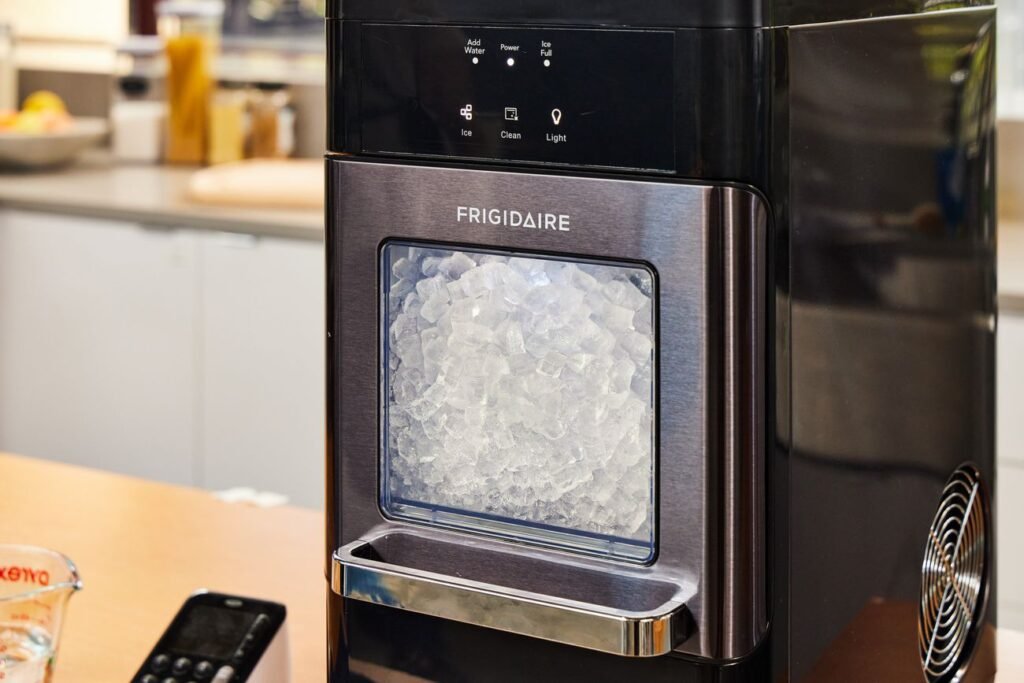
If cubes consistently become smaller, hollow, incomplete, or irregular, the ice maker may not be receiving the expected amount of water. Possible causes can include restricted water flow, filter conditions, supply-line issues, inlet-system problems, or other model-specific factors.
Before assuming an internal component has failed, check the accessible water line and follow the manufacturer’s instructions for the refrigerator’s water filter, if equipped.
If the water supply appears normal and irregular cubes continue, professional testing may be needed to determine whether the problem is occurring during water delivery or the ice-making cycle itself.
Why Is My Ice Maker Getting Water but Not Making Ice?
This symptom helps narrow the problem, but it still does not identify one specific failed part.
If water reaches the ice maker but does not become properly formed and released ice, attention may shift toward freezer temperature, the ice-making mechanism, sensors, controls, or related components.
Check whether the freezer itself is maintaining normal cold conditions. If frozen foods are becoming soft or other temperature problems are present, address the broader refrigeration problem rather than treating the ice maker as an isolated failure.
If freezer performance appears normal, diagnosis may require inspection and testing of the ice maker system.
Quick Summary: Water reaching the ice maker eliminates some possibilities, but it does not prove that the ice maker assembly itself needs replacement.
Why Is My Ice Maker Leaking Water?
First determine where the water appears.
Water around the refrigerator is different from water overflowing inside the ice-making area. Check accessible water-line connections for visible moisture, inspect the ice bin, and look for ice accumulation that may help reveal where the problem begins.
A leak may be associated with a water-line connection, water delivery problem, inlet component, fill condition, or another part of the system.
Do not ignore recurring leakage. Water can damage flooring, cabinetry, and surrounding materials. If water is approaching electrical components or an outlet, stop using the affected system and address the condition promptly.
Quick Summary: The location and timing of a leak are valuable diagnostic clues. Note exactly where the water first appears rather than simply cleaning it up and restarting the ice maker.
Why Is There a Solid Block of Ice in the Ice Bin?
Ice cubes can naturally stick together when they remain in the bin for a long time, partially melt, and refreeze. A large frozen mass that repeatedly returns, however, deserves closer attention.
Check whether the freezer is maintaining stable cold conditions and whether the refrigerator doors are closing correctly. Also look for evidence that water may be entering the ice bin where it should not.
Do not force a jammed dispensing mechanism. Remove accessible loose ice only when it can be done safely and according to the appliance instructions.
If water repeatedly freezes into a large mass, identifying the source of that water is more useful than repeatedly breaking up the ice.
Why Does My Ice Maker Make Ice but Not Dispense It?
Ice production and ice dispensing are separate functions. A full ice bin tells you that at least part of the ice-making process is working.
Start by checking for visible ice jams and make sure the bin is correctly installed. If the appliance offers different dispensing modes, verify the selected setting.
If the dispenser activates but ice does not move, the problem may involve the dispensing mechanism, auger system, motor, controls, or another component depending on the refrigerator design.
If nothing happens when the dispenser is activated, the diagnostic path may also include switches, controls, door-related conditions, or electrical components.
Quick Summary: If the bin contains normal ice but nothing reaches your glass, focus the diagnosis on the dispensing side of the system rather than assuming the ice maker has failed.
Why Won’t My Ice Maker Stop Making Ice?
An ice maker needs a way to recognize when the storage bin has enough ice. Depending on the design, this may involve a mechanical arm, sensor, or electronic control system.
Check for an obvious obstruction around accessible shutoff components. Make sure the ice bin is properly positioned and avoid forcing movable parts.
If ice production continues despite a full bin, the shutoff or sensing system may require diagnosis.
Do not simply allow excess ice to accumulate. Overfilling can interfere with normal operation and create additional problems around the bin or dispensing system.
Can a Water Filter Cause Ice Maker Problems?
It can contribute to certain problems if the refrigerator’s design routes ice-maker water through the filter.
A restricted or incorrectly installed filter may affect water flow. Symptoms can include slower ice production or smaller cubes, depending on the appliance and the severity of the restriction.
Use the filter specified for the refrigerator and follow the manufacturer’s installation and replacement instructions. Avoid assuming the filter is responsible for every ice-making problem, especially when other refrigerator symptoms are present.
Quick Summary: A filter is one part of the water-delivery path. Check it when relevant, but continue diagnosis if correcting the filter condition does not restore normal ice production.
Should I Reset My Ice Maker?
Only when the manufacturer provides a reset procedure for your specific model.
A reset can sometimes restore operation after a temporary control issue, but it does not repair a failed mechanical, electrical, or water-supply component.
Repeatedly resetting the appliance while the same problem returns can hide an important pattern. If the ice maker works briefly and then fails again, that information should become part of the diagnosis.
Avoid generic reset procedures found for unrelated models. Ice maker designs and control sequences vary.
Can I Repair an Ice Maker Myself?
Basic external troubleshooting is often reasonable. Internal repair is a different matter.
Homeowner-level checks can include:
- confirming that the ice maker is switched on;
- checking the ice bin and accessible shutoff mechanism;
- looking for visible ice jams;
- checking an accessible water line for kinks;
- reviewing filter condition and installation;
- confirming that the freezer is cooling normally.
Stop when troubleshooting requires electrical testing, significant disassembly, modification of the water system, or access to internal components you are not qualified to service.
Never bypass sensors or safety systems simply to make the ice maker operate.
When Should I Call for Professional Ice Maker Repair?
Professional diagnosis makes sense when the simple checks are complete but the symptom remains.
Examples include an ice maker that receives water but does not produce ice, repeatedly leaks, consistently produces malformed cubes, will not stop filling, has a malfunctioning dispenser, or remains inactive despite normal freezer conditions and an available water supply.
A technician may need to evaluate the water inlet system, ice maker assembly, sensors, dispensing components, wiring, controls, or related refrigeration conditions.
Professional testing is particularly useful because replacing the complete ice maker assembly is not always the correct first repair. A problem elsewhere in the water, temperature, electrical, or control system can create similar symptoms.
If basic troubleshooting does not identify the cause, Empire Appliances Repair can diagnose the ice maker and determine which part of the system is preventing normal operation.
Is It Better to Repair or Replace an Ice Maker?
There is no universal answer.
Consider the diagnosed failure, availability of replacement parts, overall refrigerator condition, history of previous problems, and the scope of the required repair.
If the ice maker has an isolated repairable fault while the refrigerator otherwise performs normally, repair may be practical. If the appliance has multiple significant problems or the required components are unavailable, the decision may look different.
The important step is diagnosis first. Without knowing what actually failed, comparing repair with replacement is mostly guesswork.
Conclusion: What Should You Do First?
When an ice maker stops working, resist the urge to begin with replacement parts.
Ask a few basic questions instead. Is the freezer cold enough? Is the ice maker enabled? Is water available? Is the filter installed correctly? Are the cubes unusually small? Is there a leak, jam, or dispensing problem?
Those answers can separate a simple operating condition from a problem that requires deeper ice maker repair.
Quick Summary: Check what is visible and accessible. Observe the exact symptom. Avoid forcing mechanisms or guessing at failed parts. When the problem reaches internal water, electrical, sensing, control, or mechanical components, use proper diagnosis to determine the next step.