


August 24, 2026
There is something effortlessly satisfying about opening a dryer and reaching into a drum filled with warm, softly finished laundry. Towels feel generous again. Bedding carries that unmistakable warmth. Clothes emerge ready for the closet rather than another hour of waiting.
A well-functioning dryer makes this small domestic ritual feel almost invisible. It works in the background, transforming damp fabric through a carefully controlled relationship between heat, airflow, movement, and time.
Then something changes.
The towels are still damp. A familiar cycle stretches longer than it used to. The drum turns, yet there is little warmth. Or perhaps the machine has become noticeably louder, hotter, or less refined in its operation.
These changes are more than inconveniences. They are clues.
“The finest appliances are almost unnoticed when they work beautifully. It is often a change in rhythm that reveals when something is no longer right.”
When Warmth Disappears but the Drum Keeps Turning
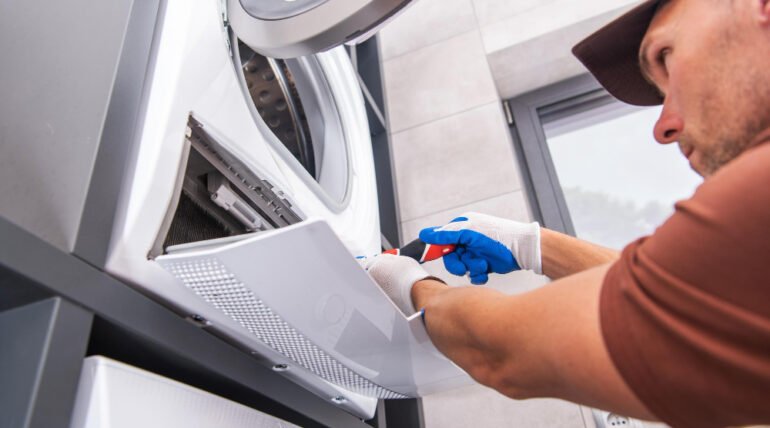
Few dryer problems are more deceptive than a machine that appears to work normally but produces no meaningful heat. The drum rotates. The controls respond. The timer advances. Yet when the door opens, the fabrics inside remain cool and damp.
It is tempting to translate this immediately into a failed heating element, but dryer repair rarely benefits from conclusions made that quickly. Electric and gas dryers create heat differently, and the heating process depends on more than a single component. Controls, temperature-related devices, electrical supply conditions, ignition components on gas models, and other parts of the system may influence the result.
The first observations should therefore remain simple. Is the dryer producing no heat at all, or merely less heat than expected? Does the behavior remain consistent through the entire cycle? Was a different cycle or temperature setting selected? Has anything about the household electrical or gas supply changed?
For an electric dryer, it is also possible for the appliance to show signs of operation while a supply-related condition affects heating performance. This is one reason a turning drum should never be treated as proof that every part of the dryer is receiving what it needs.
A gas dryer introduces a different set of possibilities. If the appliance is not heating correctly, the gas supply, ignition process, controls, sensors, and heating system may require evaluation. Internal gas-system work should not become an experimental DIY project.
The absence of warmth tells you where to begin looking. It does not tell you which component to replace.
When Drying Takes Longer, Airflow Deserves Attention
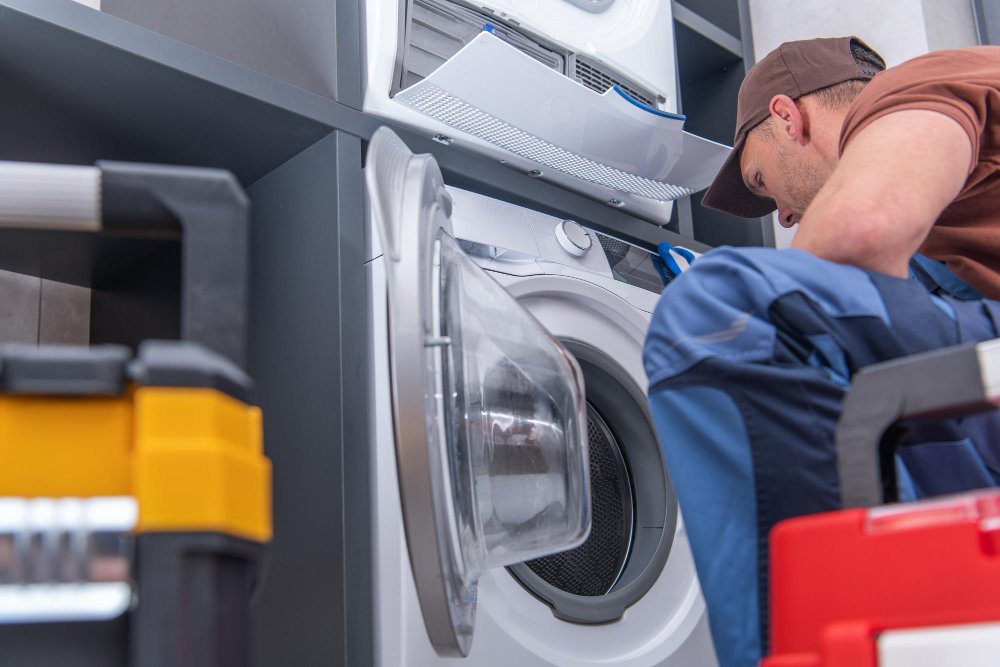
Sometimes heat is present, yet the experience has changed. A load that once finished comfortably within its normal cycle now needs another round. Towels emerge warm but damp. Bedding seems to hold moisture indefinitely. The dryer works harder, but the result feels increasingly unfinished.
In this situation, heat may not be the central question. Air may be.
A dryer has to do more than warm clothing. Moisture must leave the fabric, enter the moving air, and travel away from the appliance through the ventilation path on vented models. When that movement becomes restricted, drying performance can decline even though the machine still produces heat.
This is why the lint filter deserves regular attention. It should be cleaned according to the manufacturer’s guidance, typically as part of normal dryer use. The exhaust path also matters. A crushed, improperly installed, damaged, or restricted vent can interfere with the dryer’s ability to move moisture and heat away efficiently.
The change may feel subtle at first. Perhaps only heavy towels take longer. Then ordinary clothing begins needing additional time. Eventually the cabinet may feel hotter than expected while the laundry remains frustratingly damp.
“A dryer does not simply create heat. Its performance depends on giving that heat—and the moisture it carries—a clear path to leave.”
Restricted ventilation deserves particular respect because it can affect more than convenience. Excessive heat, abnormal operating temperatures, a persistent burning smell, smoke, or signs of severe vent restriction should never be treated as a reason to simply add more drying time.
If the dryer appears to be overheating, stop using it until the cause is understood.
Routine lint removal is homeowner maintenance. Deeper investigation of inaccessible ventilation, internal airflow components, heating controls, or electrical systems is a different level of work.
True performance is not simply about creating more heat. It is about controlling heat beautifully.
When the Dryer Begins to Sound Different
Every dryer has a voice. There is the soft movement of fabric, the steady rotation of the drum, the gentle transition as the machine changes phases. After living with an appliance for long enough, those sounds become part of the background architecture of a home.
That familiarity is useful because a new sound is often immediately noticeable.
A rhythmic thump. A high squeal. Scraping that follows every rotation. A metallic rattle that was never there before. Or perhaps the dryer starts normally, then develops a sound as the drum reaches its regular speed.
Before assuming an internal mechanical failure, remove the simple possibilities. Check pockets for coins or small objects. Make sure nothing is resting against the dryer and vibrating. Listen to whether the noise changes with the load.
If the sound remains, its character and timing become important. A noise synchronized with drum rotation presents a different diagnostic clue from a sound associated with airflow or a motor beginning to operate.
Possible causes can involve supporting components, drive-related parts, the drum system, blower-related components, or other mechanical areas. The exact design varies by dryer, which is why sound should guide inspection rather than dictate an automatic parts order.
Movement offers another clue. If the dryer runs but the drum does not turn, the drive system may need attention. If operation begins and then repeatedly stops, temperature conditions, controls, motor-related issues, or other faults may require testing.
A sophisticated diagnosis listens before it disassembles.
Continued operation is not always wise when a mechanical sound becomes severe. Grinding, metal-on-metal sounds, a burning odor, or obvious difficulty turning should be investigated rather than allowed to progress until another component is damaged.
When Heat Becomes Too Much of a Good Thing
Warmth is the essence of drying, but excessive heat changes the character of the appliance completely. Clothes that feel unusually hot, a cabinet that seems significantly hotter than normal, a sharp burning odor, or a dryer that repeatedly stops after becoming hot are signals worth taking seriously.
Begin with the conditions you can safely evaluate. Is the lint filter clean? Is the accessible vent connection visibly crushed or restricted? Has the dryer been pushed backward in a way that could compromise the exhaust path? Is the load unusually large?
If those simple conditions do not explain the behavior, the internal system may require diagnosis. Airflow, temperature regulation, heating components, sensors, controls, or other systems may need to be tested according to the dryer design.
This is also where the boundary between maintenance and repair becomes particularly important.
Do not bypass temperature safety devices to keep a dryer running. Do not continue operating an appliance with smoke, sparking, visibly damaged wiring, or a persistent burning electrical odor. Gas odors around a gas dryer require immediate attention according to appropriate gas-safety procedures rather than further appliance testing.
“Luxury in the home is not excess. It is the confidence that everything works precisely, quietly, and safely.”
The same restraint should guide decisions about parts. If a dryer overheats, replacing a temperature-related component without understanding why the abnormal condition occurred may leave the underlying problem unresolved.
The better repair is the one based on the system as a whole.
Restoring the Effortless Routine
There is a particular elegance in an appliance doing exactly what it was designed to do. The dryer starts without hesitation. The drum moves smoothly. Air circulates freely. Heat remains controlled. Moisture disappears from the fabrics, and the machine finishes its work without demanding attention.
When that balance is interrupted, begin with observation rather than assumption. Notice whether the problem involves heat, airflow, movement, sound, or the length of the cycle. Clean and inspect the accessible maintenance areas recommended by the manufacturer. Pay attention to whether the symptom is occasional or consistently returning.
If the dryer continues to take too long, does not heat, overheats, stops unexpectedly, makes abnormal mechanical noises, or cannot rotate normally, professional diagnosis can determine which system actually requires attention.
Empire Appliances Repair can evaluate dryer heating, airflow, drum movement, ventilation-related performance, controls, unusual noises, and other operating problems before a repair decision is made.
Whether the dryer should ultimately be repaired or replaced depends on more than age. The confirmed fault, overall condition, repair history, parts availability, and scope of the work create a much clearer picture.
Because the best dryer repair does more than make the machine run again. It restores the quiet rhythm of a home—the warm towels, the dry sheets, the familiar hum, and the luxury of never having to think about the appliance at all.