


July 25, 2026
You turn on the range hood while cooking, hear the fan start—and yet the steam seems to stay exactly where it is. Or maybe the fan has become noticeably louder. Perhaps the light works but the ventilation does not, or the controls suddenly require several presses before anything happens.
Sound familiar?
A range hood is easy to overlook when it works properly. It sits above the cooktop, quietly helping manage cooking vapors, grease, odors, and moisture. You usually notice it only when that familiar performance begins to change.
The good news is that not every change means the entire hood has failed. Sometimes the explanation is relatively simple. Other times, the symptom points toward a fan, switch, control, wiring, or ventilation problem that needs proper diagnosis.
Good range hood repair starts with one question: what changed?
“A range hood does not have to stop completely to tell you something is wrong. A change in airflow, sound, lighting, or control response can be the first useful clue.”
Your Range Hood Is Running—but Is It Actually Ventilating?
This is one of the most common situations: you can hear the fan, so technically the hood is running. But smoke, steam, or cooking odors seem to linger longer than they used to.
Does that automatically mean the fan motor is failing? No.
Ventilation performance depends on more than whether the motor turns. Filters, airflow restrictions, duct conditions on externally vented systems, fan operation, installation conditions, and other factors can influence how effectively air moves through the hood.
Start with what you can safely observe.
- Has airflow gradually become weaker?
- Does the problem occur at every fan speed?
- Are the accessible filters due for cleaning or replacement?
- Has the sound of the fan changed?
- Does steam remain around the cooking area longer than before?
- Did the problem appear suddenly or develop over time?
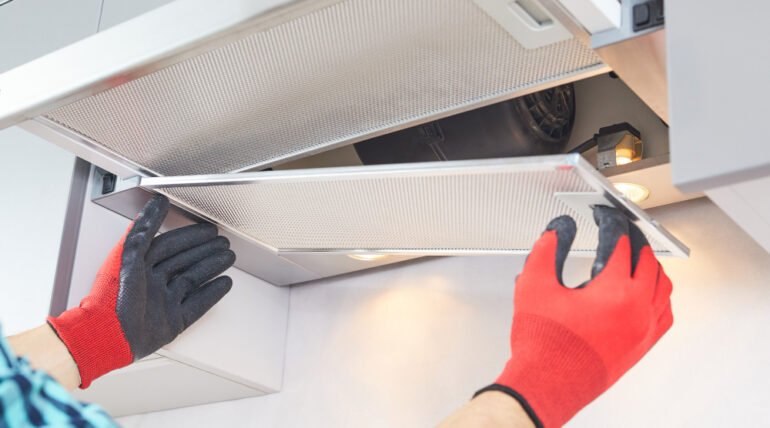
Filters deserve particular attention because they are directly exposed to cooking residue. Depending on the hood design, the appliance may use washable grease filters, replaceable filters, or additional filtration for a recirculating configuration.
Follow the manufacturer’s instructions for the filter type installed in your hood. A filter that needs maintenance can affect performance, but do not assume the filter explains every weak-airflow complaint.
If normal filter maintenance does not restore performance, the next question is whether the hood itself is moving air correctly or whether airflow is being restricted elsewhere in the system.
That distinction matters. Replacing a fan component will not solve a restriction outside the fan, just as cleaning a filter will not repair an electrical or mechanical fan problem.
The symptom is weak ventilation. The cause still needs to be established.
What If the Fan Stops—or Suddenly Sounds Completely Different?
You know the normal sound of your kitchen. That makes an unfamiliar range hood noise surprisingly easy to notice.
Maybe the fan begins rattling. Perhaps there is a vibration that was not there before. You may hear an unusual scraping or buzzing sound, or discover that one speed works while another behaves differently.
These details are useful.
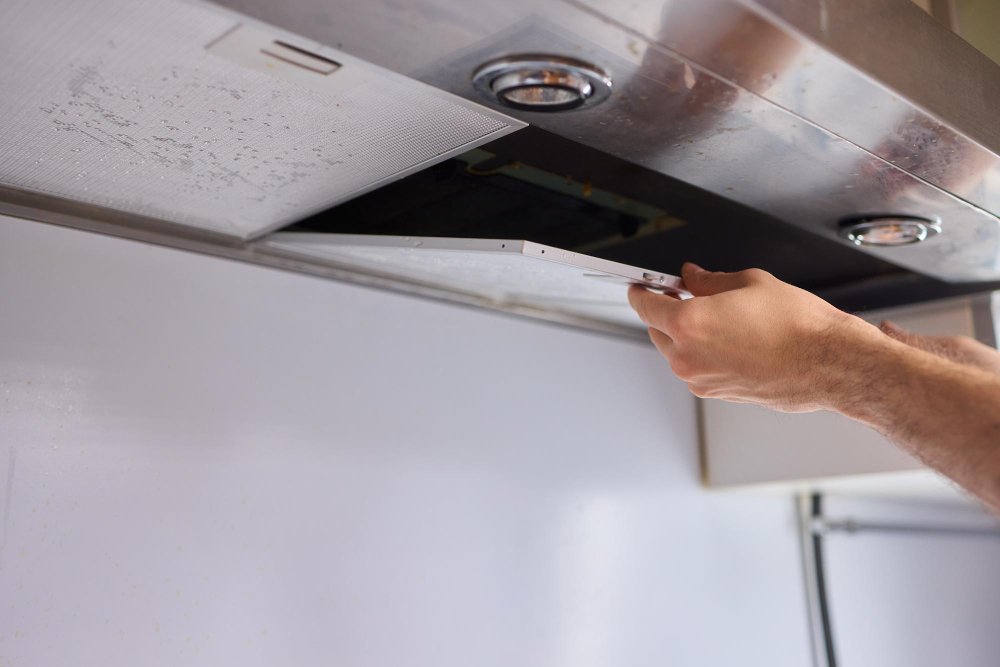
A new sound may indicate a condition involving the fan assembly, motor, mounting, controls, or another component. But diagnosing a range hood by sound alone can be misleading, so resist the temptation to order the part that seems most obvious.
Instead, notice the pattern.
- Does the noise begin immediately?
- Does it change when you select another fan speed?
- Is airflow weaker at the same time?
- Does the hood vibrate?
- Does the fan start reliably every time?
Now consider the opposite problem: what if the fan does not start at all?
If the lights still work but the fan does not, that is useful information. If neither the lights nor fan respond, that creates a different diagnostic picture. If the controls illuminate but nothing happens after a command, that is another variation worth noting.
The hood may require evaluation of the fan system, switches, controls, wiring, power conditions, or other model-specific components.
What should you avoid? Removing covers and performing energized electrical testing simply because the fan will not start. If troubleshooting moves into internal wiring, motor testing, or control-board diagnosis, it has moved beyond a basic homeowner check.
Smoke, unexpected sparking, a persistent electrical burning smell, or visibly damaged wiring are reasons to stop using the hood. Do not repeatedly switch it on to see whether the problem disappears.
When the Fan Works but the Light or Controls Don’t
A range hood is more than a ventilation fan. Lighting and controls are part of the everyday experience too, which means a hood can remain partially functional while still needing attention.
Has the cooking light stopped working while everything else seems normal? Start with the simple possibilities appropriate for your model. If the appliance uses a homeowner-replaceable lamp, check the manufacturer’s instructions for the correct type and replacement procedure.
If a correct replacement does not solve the problem, the issue may extend beyond the lamp itself.
Now think about the controls. Perhaps a button works intermittently. Maybe one fan setting has stopped responding. A touch control may behave unpredictably, or the hood may not respond even though power appears to be present.
Again, avoid jumping directly to the control board.
A control symptom is not automatically a failed control board. Switches, wiring, connections, power conditions, or other components may produce symptoms that appear similar from the outside.
This is where your observations become especially useful. Instead of saying, “The hood is broken,” you can describe the problem more precisely:
“The lights work normally, but the fan does not respond at any speed.”
Or:
“The fan operates, but the light no longer turns on.”
Or:
“Low speed works, but the hood behaves differently when I select a higher setting.”
Those descriptions separate the functions that still work from the one that has changed. That gives diagnosis a much better starting point.
Quick Tip: Before requesting service, write down which fan speeds work, whether the light works, what the controls display, when the problem occurs, and whether there are unusual sounds or odors. Five minutes of observation can provide more useful information than guessing which component has failed.
Sometimes the Hood Isn’t the Whole Story
Here’s an important question: if your hood sounds normal but ventilation has become noticeably worse, are you sure the problem is entirely inside the appliance?
For an externally vented hood, the complete ventilation path matters.
The fan has to move air through the hood and onward through the installed exhaust system. A restriction or problem elsewhere in that path can affect the result you experience in the kitchen.
This is why weak ventilation deserves a broader look than “the fan must be bad.”
A professional diagnosis may consider:
- filter condition;
- fan operation;
- airflow behavior;
- accessible ventilation conditions;
- controls and fan-speed response;
- electrical or mechanical problems within the hood.
Recirculating hoods work differently because they return filtered air to the room rather than exhausting it outdoors. Filter condition and the manufacturer’s maintenance requirements therefore become particularly important.
And what about cooking odors?
If odors suddenly linger much longer than they once did, consider the change alongside airflow and filter condition. The important word is suddenly. Your hood’s previous normal behavior gives you a useful reference point.
It is also worth separating a ventilation-performance problem from a safety problem involving another appliance. If you smell gas around a gas cooktop or range, do not assume the range hood is the solution. A suspected gas leak requires the appropriate gas-safety response rather than simply turning on ventilation.
The hood can help manage normal cooking vapors. It is not a substitute for addressing an unsafe condition at its source.
When Does Range Hood Repair Become the Right Next Step?
If filter maintenance or another simple manufacturer-approved check solves the problem, excellent. Sometimes the simplest explanation really is the right one.
But what if the fan still will not run? What if ventilation remains weak? What if the hood makes increasingly unusual noises, the controls behave unpredictably, or the lighting problem goes beyond a normal replaceable lamp?
That is when diagnosis becomes more useful than continued experimentation.
Empire Appliances Repair can diagnose range hood and vent hood problems involving fans, weak ventilation, lighting, switches, controls, unusual fan noises, and related electrical or mechanical conditions.
The objective is straightforward: identify what is actually preventing the hood from performing normally before deciding what should be repaired or replaced.
The same principle applies when deciding whether to repair the existing hood or replace it. Make that decision after the problem has been identified.
Consider the confirmed fault, overall condition, repair history, parts availability, installation configuration, and scope of the required work. A built-in or custom-integrated hood may also have cabinetry, ducting, electrical, and dimensional considerations that make replacement more involved than simply choosing another appliance.
Most importantly, pay attention when your kitchen begins to feel different.
More steam. Lingering odors. Less airflow. A new vibration. A fan that hesitates. A light or control that no longer behaves as expected.
You do not need to know which part failed.
You only need to recognize that something changed.
From there, safe observation and proper diagnosis can turn an irritating kitchen mystery into a clearly defined repair problem—and help your range hood return to doing what it does best: quietly disappearing into the background while you cook.