


September 2, 2026
There are appliances designed to command attention, and there are appliances designed to make everything around them feel better. The range hood belongs firmly in the second category. At its best, it is almost architectural: a slim line of stainless steel above a cooktop, a sculptural canopy over an island, or a discreet insert nearly concealed within custom cabinetry.
Yet its real contribution has little to do with appearance.
Turn on a burner, heat a skillet, and the kitchen immediately begins to change. Steam rises. Cooking odors spread. Airborne grease follows the heat upward. The vent hood is there to capture and manage that air before the effects of cooking travel farther through the room.
When the system begins to fail, the change can be gradual. The fan still makes noise, but smoke lingers longer. The kitchen smells like dinner hours after the plates have been cleared. Grease appears more readily on nearby surfaces. Or the hood becomes impossible to ignore for another reason: rattling, vibration, a dead control panel, flickering lights, or a fan that simply refuses to start.
Range hood / vent hood repair is therefore less about fixing an accessory and more about restoring a working part of the kitchen’s ventilation system.
And because range hoods combine airflow, filtration, mechanical components, lighting, and electrical controls, the symptom you notice first does not always reveal the component responsible.
“A good vent hood disappears into the rhythm of the kitchen. You often notice its importance only when the air stops clearing.”
EDITOR’S NOTE: Before assuming the hood has suffered a major mechanical failure, look at the parts designed to receive the most exposure. Filters, accessible air passages, and exterior surfaces live directly in the path of cooking residue and deserve attention first.
The Real Measure of a Range Hood Is What Happens to the Air
A vent hood can look pristine and still perform poorly. The meaningful question is not whether the fan produces sound; it is whether the system is effectively moving or filtering cooking air as designed.
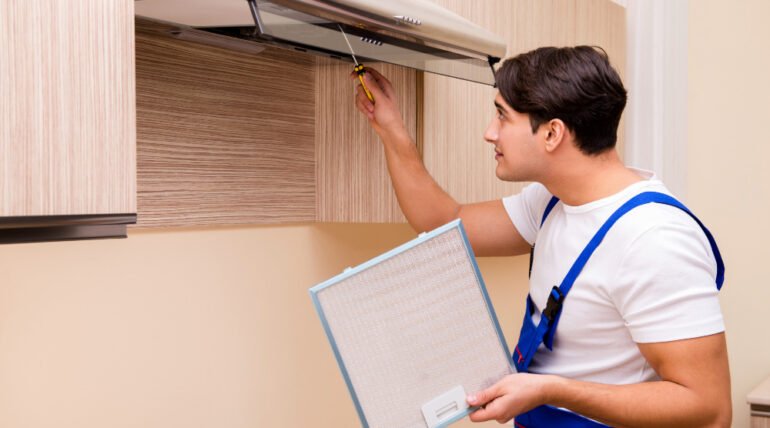
Weak performance may begin with something remarkably ordinary: a filter loaded with grease. Depending on the hood design, filters may be washable or replaceable. Cleaning or replacing them according to the manufacturer’s instructions is one of the most sensible first steps when airflow seems weaker than it once was.
But filtration is only one part of the system. Ducted range hoods move captured air through ductwork to the exterior. Recirculating models filter the air and return it to the room. That distinction matters because the diagnostic path is not identical.
A ducted hood with a clean filter can still perform poorly if airflow is restricted elsewhere in the ventilation path. A recirculating model may depend heavily on the condition and correct installation of its filters. Neither situation automatically proves that the fan motor has failed.
PERFORMANCE HIGHLIGHT: A fan that spins is not necessarily a ventilation system that performs correctly. Filter condition, airflow restrictions, installation, fan operation, and the hood’s ventilation design all influence the result you experience in the kitchen.
There are simple observations worth making before moving deeper into diagnosis. Does airflow change noticeably between fan speeds? Has the sound of the hood changed? Does the fan operate but seem weaker than before? Are the filters overdue for maintenance? Did the problem appear suddenly, or has performance declined gradually?
The important shift is from asking “Does the hood turn on?” to asking “Is the hood still doing what it was designed to do?”
That distinction prevents one of the easiest diagnostic mistakes: replacing an electrical or mechanical component before checking the airflow conditions surrounding it.
Noise, Vibration, and Light Can Reveal a Different Side of the Problem
Ventilation problems are not always quiet. Sometimes the first indication of trouble is an appliance that has suddenly become much louder.
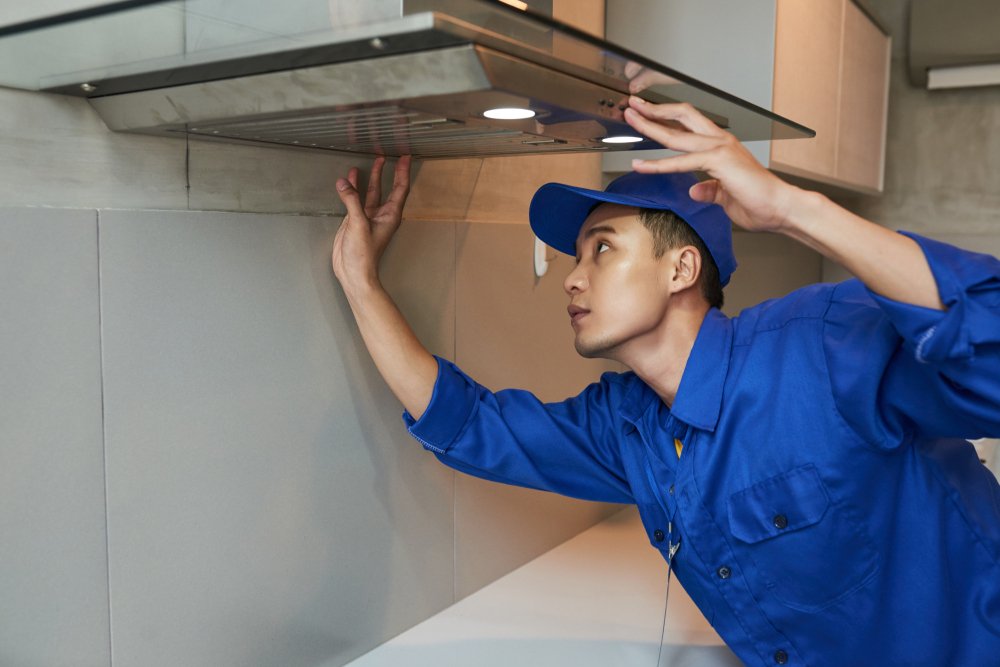
A new rattle may suggest a loose accessible component, filter, or another part vibrating during operation. A scraping or grinding sound can point toward a different mechanical concern. Excessive vibration deserves attention as well, particularly when it appears suddenly after a period of normal operation.
The character of the sound matters. So does its timing. A noise present only at one fan speed provides different information from a noise that begins the instant the motor starts.
“Unusual sound is not merely an annoyance. In a mechanical system, a change in sound is information.”
Lighting creates another diagnostic path. Many modern range hoods integrate task lighting directly above the cooking surface. If the fan operates normally but the light does not, the problem may be limited to the lighting system. If both lighting and ventilation stop at the same time, power delivery, controls, wiring, or another shared electrical issue may deserve consideration.
Touch controls, electronic displays, and multiple fan-speed settings add still more possibilities. A control that responds intermittently is different from a completely dead hood, just as one failed light is different from a total loss of electrical function.
DIAGNOSTIC HIGHLIGHT: Separate the functions before assuming the entire appliance has failed. Fan operation, fan speed, lighting, controls, and airflow are related, but they can fail independently.
EDITOR’S NOTE: Clean design can make a modern hood appear simple from the outside. Internally, electronically controlled models may combine switches, control boards, motors, lighting circuits, sensors, and other components. A minimalist exterior does not necessarily mean a simple internal repair.
Basic external inspection remains appropriate: confirm power, check controls, inspect correctly installed accessible filters, and look for obvious loose components only where the manufacturer permits access. Internal electrical testing, motor work, or control-system diagnosis belongs in a different category.
Grease Is More Than a Cleaning Issue
Few substances reveal the working life of a kitchen as clearly as grease. It settles gradually, collecting on filters and nearby surfaces while the hood works directly above heat and cooking vapors. Left unmanaged, that accumulation is not simply unattractive—it can interfere with normal ventilation performance.
Filter maintenance should follow the manufacturer’s instructions because filter materials and hood designs differ. A reusable metal filter may have a cleaning procedure, while another filtration system may contain components intended for periodic replacement rather than washing.
What should not become routine is operating a hood indefinitely with heavily contaminated filters simply because the fan still turns.
A range hood should be maintained as a ventilation appliance, not polished only as a decorative surface.
Persistent grease accumulation inside areas that are not intended for homeowner access, a burning odor, smoke from the appliance, unexpected sparking, or signs of overheated electrical components require a more cautious response. Stop using the hood when continued operation could create an electrical or fire concern.
The same principle applies when a breaker repeatedly trips. Resetting electrical protection again and again does not diagnose the condition that caused it to activate.
SAFETY HIGHLIGHT: Stop using the vent hood if you observe smoke from the appliance, unexpected sparking, a persistent burning electrical odor, visibly damaged wiring, or severe abnormal overheating. Do not bypass switches, electrical protection, or other safety-related components.
There is an aesthetic reason to maintain a hood well, of course. Grease-streaked stainless steel and neglected filters rarely complement a carefully considered kitchen. But the stronger argument is functional: the hood exists to manage the byproducts of cooking, and maintenance helps preserve its ability to do exactly that.
“In the best kitchens, maintenance protects more than appearance. It protects performance.”
A Better Repair Begins With Understanding the System
When cleaning accessible filters, confirming power, checking normal controls, and performing other manufacturer-approved external checks do not solve the problem, the next step is diagnosis rather than experimentation.
A technician may need to evaluate the fan motor, switches, electronic controls, wiring, lighting components, fan assembly, or other internal parts. When airflow remains poor despite apparently normal fan operation, the broader ventilation path may also need consideration.
This is particularly important because not every complaint attributed to the hood originates inside the hood itself. Ventilation performance can be affected by installation and airflow conditions beyond the visible appliance. Replacing a motor cannot correct a separate restriction elsewhere in a ducted system.
Before requesting range hood / vent hood repair, note which functions still work. Test the available fan speeds without repeatedly operating an appliance that shows safety warning signs. Record whether the lights and controls respond. Describe any unusual sound and when it occurs. If airflow has declined, note whether the change was sudden or gradual.
Those observations transform a vague complaint—the hood isn’t working right—into information that can guide a more efficient diagnosis.
THE BETTER APPROACH: Clean what is meant to be maintained. Observe what has changed. Separate airflow problems from electrical and mechanical symptoms. Then test the system before replacing components.
If the problem extends beyond accessible maintenance and basic checks, Empire Appliances Repair can diagnose range hood and vent hood problems and determine whether the issue involves the appliance’s fan, controls, electrical system, lighting, or another part of its operation.
There is something fitting about giving this particular appliance a little more consideration. Kitchens are designed around what we see—cabinetry, stone, lighting, appliances, proportion—but they are experienced through far more than sight. They are heat, sound, aroma, movement, and air.
The best range hood does not need to dominate the room. It simply allows the room to recover beautifully after cooking is done.