


August 3, 2026
It started with the ice cream.
Late one evening, someone opened the freezer, pulled out a carton, and noticed that the spoon went through it far too easily. Not melted. Not warm. Just softer than it should have been.
The freezer was still cold. The frozen vegetables felt solid. Ice remained in the tray. Nothing about the appliance suggested an emergency.
So the carton went back on the shelf and the door closed.
Maybe someone had left the door open for a few minutes. Maybe the freezer was simply recovering from being loaded earlier that day.
By itself, soft ice cream did not prove that anything had failed.
But it was the first clue.
“Freezer problems do not always begin with a warm compartment. Sometimes they begin with one small change that is easy to explain away.”
Stage One: The Morning After the First Clue
The next morning, curiosity won.
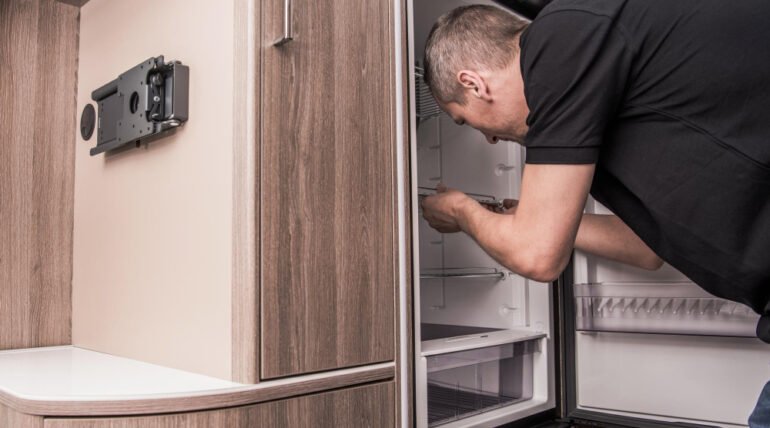
The freezer door opened again, this time not to take something out but to look more carefully. Several packages still seemed frozen, yet the contents near the front did not feel quite as firm as usual.
That was enough to change the question.
Instead of asking, “Is the freezer broken?” it became more useful to ask, “Is the freezer maintaining its normal temperature?”
The temperature setting was checked first. Nothing unusual there. No one remembered changing it.
Next came the door. A package had shifted forward, but it did not appear to be preventing the door from closing. The gasket looked reasonably clean, and nothing obvious was caught between the seal and the cabinet.
Then came the temptation to turn the temperature control colder.
It feels logical, doesn’t it? If the freezer seems too warm, make it colder.
But changing the setting immediately can hide useful information. If the freezer has operated normally at the same setting for months or years and suddenly cannot maintain temperature, the setting itself may not be the real problem.
So instead of changing everything, the setting was noted and left alone for the moment.
The door stayed closed as much as possible.
A few hours later, the freezer was checked again.
The food was still frozen—but the concern had not disappeared.
Nothing had failed dramatically. The appliance simply no longer felt predictable.
That distinction matters in freezer repair. A freezer does not have to become completely warm before its behavior becomes diagnostically useful.
Stage Two: Frost Changed the Story
Later that day, another detail appeared.
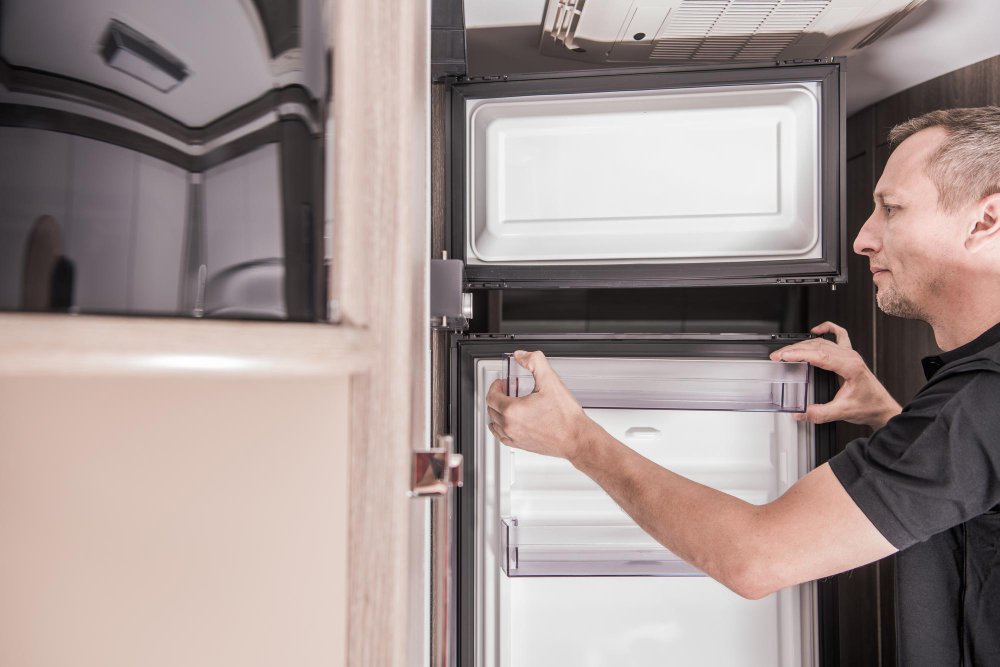
There was frost along an interior area where it had not normally been noticeable.
At first, it looked like an unrelated problem. The temperature issue was one thing; frost was another.
But appliances rarely care about the categories we create for them.
Temperature, moisture, airflow, door sealing, and defrost operation can influence one another. A freezer with abnormal frost and inconsistent temperature is telling a more detailed story than a freezer with either symptom alone.
The door received another inspection. Was it closing completely? Were drawers correctly positioned? Was a package pushing against the door? Did the gasket make consistent contact?
These were simple questions, but they mattered because warm, humid air entering the compartment can contribute to frost formation.
No obvious obstruction appeared.
That did not prove the door seal was perfect, nor did it prove an internal defrost problem existed. It simply eliminated some of the easiest explanations.
Then came another temptation: remove the frost.
A screwdriver would make quick work of it, wouldn’t it?
That is exactly the kind of shortcut that can transform a manageable freezer problem into serious damage. Sharp tools should not be used to chip ice from a freezer. Refrigerant tubing or other components may be concealed behind surfaces that look harmless from the outside.
If defrosting is appropriate, it should be done according to the manufacturer’s instructions.
“Removing the ice may remove the evidence. Understanding why the ice formed is what moves the diagnosis forward.”
By evening, the freezer had now offered two clues: inconsistent freezing and unusual frost.
Neither clue named a failed component.
Together, however, they made “wait and see” less satisfying.
Stage Three: The Sound That Wasn’t There
The following day, something felt different before the freezer door was even opened.
The kitchen was quiet.
Normally, the freezer occasionally contributed its own background soundtrack: a soft hum, a fan, the subtle mechanical sounds that become so familiar we stop consciously hearing them.
Now the silence seemed noticeable.
Was the freezer supposed to be running at that exact moment? Not necessarily. Refrigeration appliances cycle, and silence by itself does not prove a failure.
So the observation was added to the others rather than treated as a diagnosis.
A little later, operating sounds returned. But they seemed to continue for a long time.
Now the story had another layer.
The freezer appeared to be operating, yet the temperature was still questionable. Frost had appeared. The normal rhythm of operation seemed different.
This is where troubleshooting becomes less about individual symptoms and more about relationships between them.
A freezer that runs frequently may be responding to conditions such as recent loading, repeated door opening, room conditions, airflow limitations, frost accumulation, door sealing, control behavior, or a cooling-system problem.
A freezer that becomes warm and unusually quiet creates a different diagnostic path.
And a new grinding, buzzing, rattling, or repeated clicking sound would add yet another clue.
The homeowner does not need to decide whether the sound belongs to a fan, compressor, or another component. The useful information is simpler:
- When did the sound begin?
- Does it happen during cooling?
- Does it occur together with the temperature problem?
- Is frost present at the same time?
Those observations preserve the sequence of events.
And the sequence is often far more valuable than a guess.
Stage Four: The Problem Became Bigger Than the Freezer
By the second evening, the ice cream was no longer the main concern.
Food safety was.
Some packages still felt solid, while others were beginning to soften. At that point, repeatedly opening the door to “check whether it’s colder yet” was no longer helpful.
The freezer needed to retain as much cold as possible while the food inside was assessed separately according to appropriate food-safety guidance.
This is an important moment in any freezer problem because appliance diagnosis and food safety are related, but they are not the same decision.
You can still be investigating why the freezer is warming while simultaneously needing to decide what to do with food that has begun to thaw.
The appliance can wait for diagnosis. Perishable food may not offer the same luxury.
At the same time, the limits of homeowner troubleshooting were becoming clearer.
The settings were normal. The door was not obviously blocked. The problem persisted. Frost had appeared. Cooling performance remained inconsistent.
Continuing to adjust controls or repeatedly unplug and restart the freezer would add little useful information.
Internal diagnosis might now require evaluation of airflow, fans, temperature-related components, the defrost system, controls, compressor operation, or the sealed refrigeration system.
Those are not systems to investigate by puncturing tubing, opening the refrigerant circuit, bypassing controls, or experimenting with energized electrical components.
There are also symptoms that should shorten the story immediately. Smoke, sparking, a persistent burning electrical odor, visibly damaged wiring, or water reaching electrical components are reasons to stop normal operation rather than continue testing.
“Knowing when to stop troubleshooting is part of good troubleshooting.”
Stage Five: From a Soft Carton to a Real Diagnosis
Looking back, there was no single dramatic moment when the freezer announced, “I need repair.”
There was a sequence.
First, the ice cream softened.
Then the temperature seemed inconsistent.
Frost appeared.
The freezer’s familiar operating rhythm seemed different.
Finally, the same symptoms remained after the simple external conditions had been checked.
That is the point where professional freezer repair becomes more useful than continued guessing.
A technician can take the story the appliance has already provided and test the systems that may explain it: airflow, fans, defrost operation, temperature sensing, controls, compressor-related operation, or the sealed refrigeration system.
Empire Appliances Repair can diagnose these freezer problems and determine which condition is actually responsible before a repair decision is made.
And only then does the repair-versus-replacement question become meaningful.
The freezer’s age can be considered, but so should the confirmed fault, overall condition, previous repair history, parts availability, and scope of the required work. “It isn’t freezing” is not enough information by itself to decide that an appliance should be replaced.
The story began with something almost trivial: a spoon moving too easily through a carton of ice cream.
That detail did not diagnose the freezer.
It simply made someone pay attention.
And sometimes that is exactly how useful diagnosis begins—not with a machine that has completely stopped working, but with the moment you realize it no longer behaves quite the way it did yesterday.
“The first warning sign may be small. What matters is noticing what happens next.”